HRV and Recovery-Based Training: How to Train Harder Without Guessing
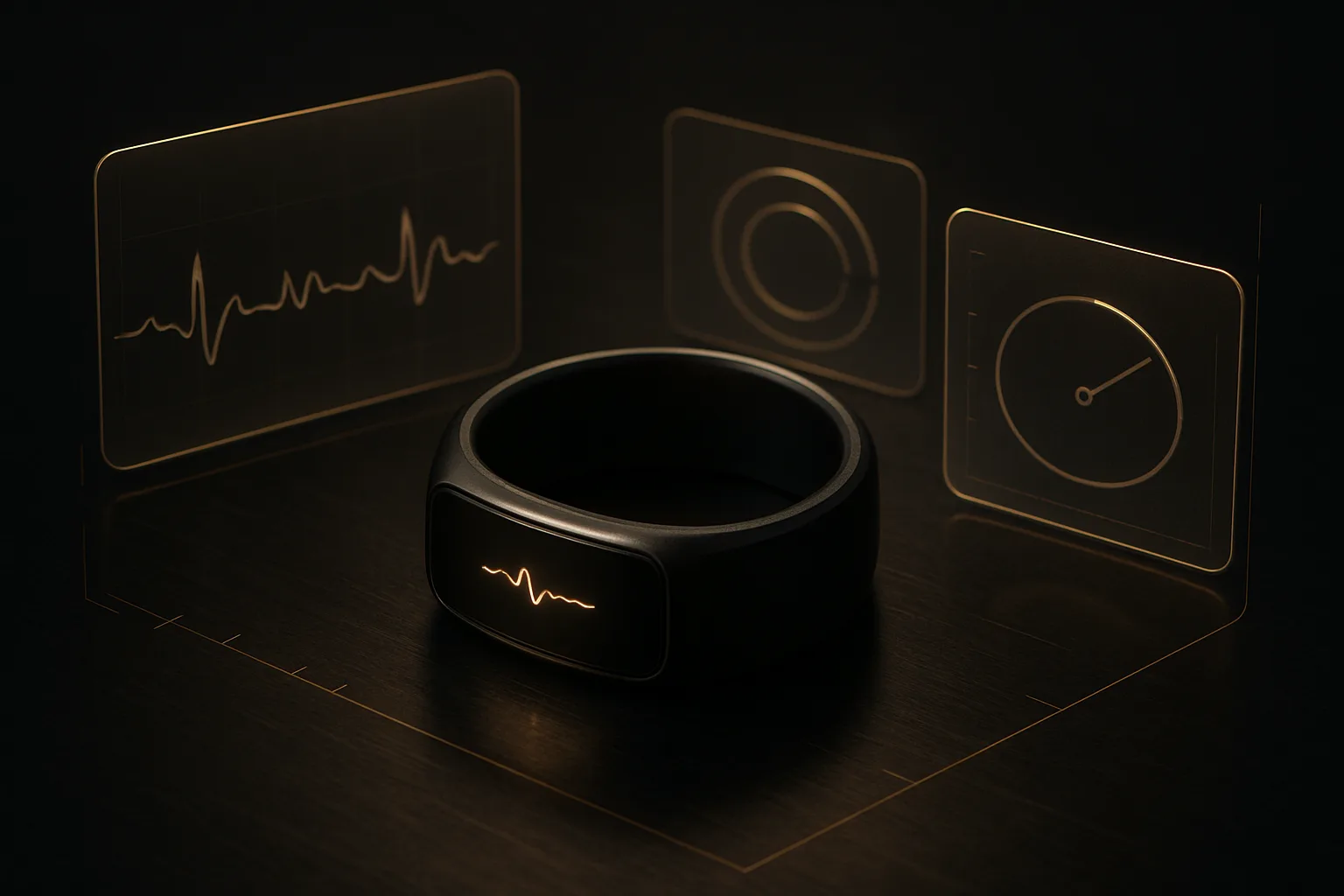
HRV and recovery-based training uses your wearable data to match training intensity to your current recovery status instead of blindly following a fixed plan. Done well, it can improve consistency, reduce unnecessary fatigue, and help busy adults make smarter day-to-day exercise decisions.
If you own an Apple Watch, Oura, Whoop, or Garmin, you already have access to more recovery data than most athletes had a decade ago. The problem is not data access. It’s knowing what to do with it on a real Tuesday when sleep was mediocre, work is chaotic, and your training plan says “hard session.”
That’s where HRV and recovery-based training become useful.
Instead of treating every workout like it should happen exactly as written, recovery-based training uses signals from your body to help decide whether today is the right day to push, maintain, or back off. HRV is one of the most practical signals for that job.
If you need a primer on the metric itself, start with How to Read Your HRV: A Practical Guide to Heart Rate Variability. This article focuses on the next step: how HRV should influence training decisions.
What HRV actually tells you about recovery
Heart rate variability (HRV) reflects variation in time between heartbeats. In practice, it gives insight into how your autonomic nervous system is responding to stress, training load, sleep, illness, travel, alcohol, and life in general.
Higher isn’t always “better” in a simplistic sense. What matters more is what’s normal for you and whether your current readings suggest that your system is adapting well or getting overloaded.
Recent reviews emphasize that HRV is best used as a non-invasive marker of autonomic function, stress, and recovery, with RMSSD and its log-transformed version commonly used because they are practical and reliable for wearable-based monitoring (MDPI narrative review, PMC version). The same review highlights a point most consumers miss: near-daily measurements and weekly trends are more informative than isolated spot checks.
That matters because one bad reading does not automatically mean “don’t train.” HRV can move for lots of reasons:
- poor sleep n- dehydration
- psychological stress
- a hard workout yesterday
- alcohol
- travel
- early signs of illness
- normal biological noise
So think of HRV as contextual readiness data, not a permission slip.
What recovery-based training looks like in practice
At its core, recovery-based training means your plan has structure, but not rigidity. You still know your goals. You still train progressively. You just stop pretending your body recovers on a perfect schedule.
A simple version looks like this:
- HRV in normal range, energy good: proceed with the planned hard or moderate session.
- HRV slightly suppressed, soreness or stress elevated: keep the session, but reduce volume or intensity.
- HRV clearly below baseline for multiple days, recovery markers poor: swap intensity for Zone 2, mobility, walking, or full rest.
This is the practical middle ground between two unhelpful extremes:
- blindly following a fixed plan no matter what
- obsessively changing everything based on every daily score
The evidence generally supports this middle ground. A systematic review and meta-analysis found that HRV-guided training was superior for enhancing vagal-related HRV indices compared with predefined training, while fitness and performance outcomes showed small advantages in favor of HRV-guided approaches but not always statistically significant across studies (PubMed abstract, full review).
Another meta-analysis comparing HRV-guided versus predefined training concluded that HRV-guided prescription can be at least as effective and potentially more individualized, particularly by helping avoid maladaptive responses in some people (MDPI review).
For busy professionals, that individualization is the point. You do not need elite-sport precision. You need a system that helps you make better decisions more often.
Why fixed training plans fail busy adults
Most training plans are built as if recovery is predictable. Real life isn’t.
A standard plan might say:
- Monday: strength
- Tuesday: intervals
- Thursday: tempo
- Saturday: long session
That can work when life is stable. But many adults 30-55 are stacking training on top of:
- demanding work schedules
- poor sleep windows
- parenting responsibilities
- frequent travel
- inconsistent meal timing
- chronic low-grade stress
In those conditions, recovery is often the limiting factor, not motivation.
That’s why wearable data only becomes useful when it changes behavior. If your device shows suppressed recovery but you still hammer every session, the metric is just entertainment. We talk about this broader problem in Wearable Data Coaching: How to Turn Health Metrics Into Real Behavior Change.
Recovery-based training helps solve a common pattern:
- You feel behind.
- You force a hard workout on a bad-recovery day.
- Session quality drops.
- Fatigue accumulates.
- Consistency breaks a week later.
A better approach is to protect the long game. One adjusted session is not failure. It is often what preserves the next five.
This is also where a human layer matters. Devices can flag low readiness. They usually cannot tell you whether that means:
- skip intensity but still train
- move the session by 24 hours
- reduce sets and keep technique work
- prioritize sleep and walking for two days
That gap is exactly why people outgrow generic apps and start looking for support that blends data with judgment, as we explain in What a Biometric Personal Trainer Actually Does Better Than a Basic Fitness App.
How to use HRV without overreacting to it
The biggest mistake people make with HRV is treating it like a stock ticker. One low number, and they panic. One high number, and they assume they should max out.
A more evidence-aligned approach is boring, which is usually a good sign.
1. Focus on baseline and trend
Your HRV should be interpreted against your own normal range, not someone else’s. Research reviews consistently point to the value of repeated measurements, rolling averages, and variability patterns rather than one-off readings (MDPI narrative review).
2. Pair HRV with other recovery markers
HRV is stronger when combined with subjective and behavioral signals:
- sleep duration and quality
- resting heart rate
- soreness
- mood
- motivation to train
- illness symptoms
- recent training load
If HRV is down but you slept well, feel good, and have been training lightly, that may mean very little. If HRV is down, resting heart rate is up, and you feel flat, that’s a stronger case to modify the day.
3. Use it to guide intensity, not just rest
For most people, the best use of HRV is not “train” versus “don’t train.” It is deciding how hard to train today.
That might mean:
- replacing HIIT with Zone 2
- cutting strength volume by 20-30%
- extending warm-up and reassessing
- keeping movement but avoiding high strain
4. Watch for repeated suppression, not just one off day
A single low-HRV morning after a hard session may be normal. Several consecutive days of suppressed HRV with poor subjective recovery is much more actionable.
5. Remember that adaptation can feel messy
Training is supposed to create stress. The goal is not to keep HRV high every day. The goal is to apply enough stress to improve while recovering enough to repeat it.
Where HRV-guided training works best—and where it has limits
HRV-guided approaches are especially useful for people who:
- already train 3-6 days per week
- have inconsistent work or travel schedules
- tend to overdo intensity when stressed
- want better recovery awareness
- use wearables but struggle to turn data into decisions
There is good evidence for HRV-guided decision-making in endurance contexts. A systematic review on wearable-based endurance training monitoring concluded that HRV can support training adaptation and daily adjustment, especially when used systematically rather than casually (ScienceDirect review). Emerging research also suggests HRV-guided programming may be useful in strength and remote-coaching settings, with preliminary evidence showing high adherence and meaningful strength gains in recreationally trained participants (remote coaching study PDF).
But there are limits.
HRV should not be treated like a diagnostic tool. It can reflect stress and recovery, but it does not tell you exactly why a change occurred.
It is also not equally useful for everyone. Some people get clear, actionable patterns. Others see noisier data. And if your basics are weak, HRV won’t save you.
Those basics still matter most:
- sleep consistency
- sensible training progression
- enough protein and calories
- hydration
- stress management
- realistic scheduling
There’s also a mindset trap here. Many people use recovery data to justify doing less. The real value is not finding reasons to skip training. It’s making the right session easier to repeat tomorrow.
If your broader goal is healthier aging and better long-term resilience, HRV is just one part of the picture. Our article on Biological Age: What Your Wearables Can Measure—and What They Can’t covers where recovery metrics fit into a bigger health view.
The smartest version of recovery-based training is simple enough to follow
The best training system is not the most advanced one. It’s the one you can actually use when life is busy.
For most adults, a practical recovery-based framework looks like this:
- Green day: train as planned.
- Yellow day: keep the habit, reduce the strain.
- Red day: recover on purpose instead of forcing intensity.
That’s it.
The hard part is not understanding the concept. The hard part is applying it consistently without second-guessing yourself. That’s where coaching changes the equation. A strong system combines:
- your wearable data
- your recent training load
- your recovery trends
- your real schedule
- accountability when motivation is uneven
RxFit.ai was built for exactly that middle ground between a generic app and expensive one-on-one coaching. You get an AI dashboard that pulls in your wearable data and a real human coach who helps translate it into decisions you can stick with.
If you want your HRV to become something more than a number you check and ignore, explore our blog for more guidance or see pricing to find the right starting point.
Related reading: Biological Age: What Wearables Can Help You Improve
Related reading: HRV and Recovery-Based Training: How to Use Wearable Data Without Overthinking It
- ✓HRV is most useful as a trend, not a single daily score.
- ✓Recovery-based training means adjusting intensity when your body shows signs of poor recovery.
- ✓Research suggests HRV-guided training can improve vagal-related HRV and may reduce negative training responses compared with fixed plans.
- ✓The best HRV decisions combine wearable data with sleep, soreness, stress, and training context.
- ✓For most busy professionals, the goal is not perfect optimization but more consistent, sustainable training.
Frequently Asked Questions
What is HRV and recovery-based training?
HRV and recovery-based training means adjusting your workout intensity based on how recovered your body appears to be, rather than following a rigid plan no matter what. HRV is one of the inputs used to estimate readiness, alongside sleep, resting heart rate, soreness, stress, and recent training load.
Should I skip workouts when my HRV is low?
Not automatically. A low HRV reading is best treated as a signal to check context, not a command to stop training. Often the smarter move is to reduce intensity or volume rather than skip movement entirely.
Is HRV-guided training better than a fixed training plan?
Research suggests HRV-guided training can be at least as effective as predefined plans and may help reduce negative responses in some people. Its biggest advantage is individualization, especially when your recovery fluctuates due to stress, sleep, or travel.
Which wearable is best for HRV and recovery tracking?
Apple Watch, Oura, Whoop, and Garmin can all provide useful HRV and recovery signals if you collect data consistently. The best device is usually the one you will actually wear regularly and that fits into a system for making decisions from the data.
Can HRV help with strength training, or is it just for endurance athletes?
HRV has been studied more extensively in endurance training, but emerging research suggests it can also be useful for strength programming. In practice, it can help decide when to push volume or intensity and when to shift toward lighter work or recovery.
How many days of HRV data do I need before using it to guide training?
You need enough data to establish a personal baseline, which usually means collecting readings consistently over at least a few weeks. HRV becomes much more useful when you look at trends over time rather than isolated daily values.
The RxFit.ai Research Team turns peer-reviewed studies and wearable-data trends into practical coaching guidance. Every post is reviewed against our coaching methodology: AI insight, human accountability.
Open the RxFit web app → Compare coaching options →